How to spot good fries: 7 things that give a fries shop away
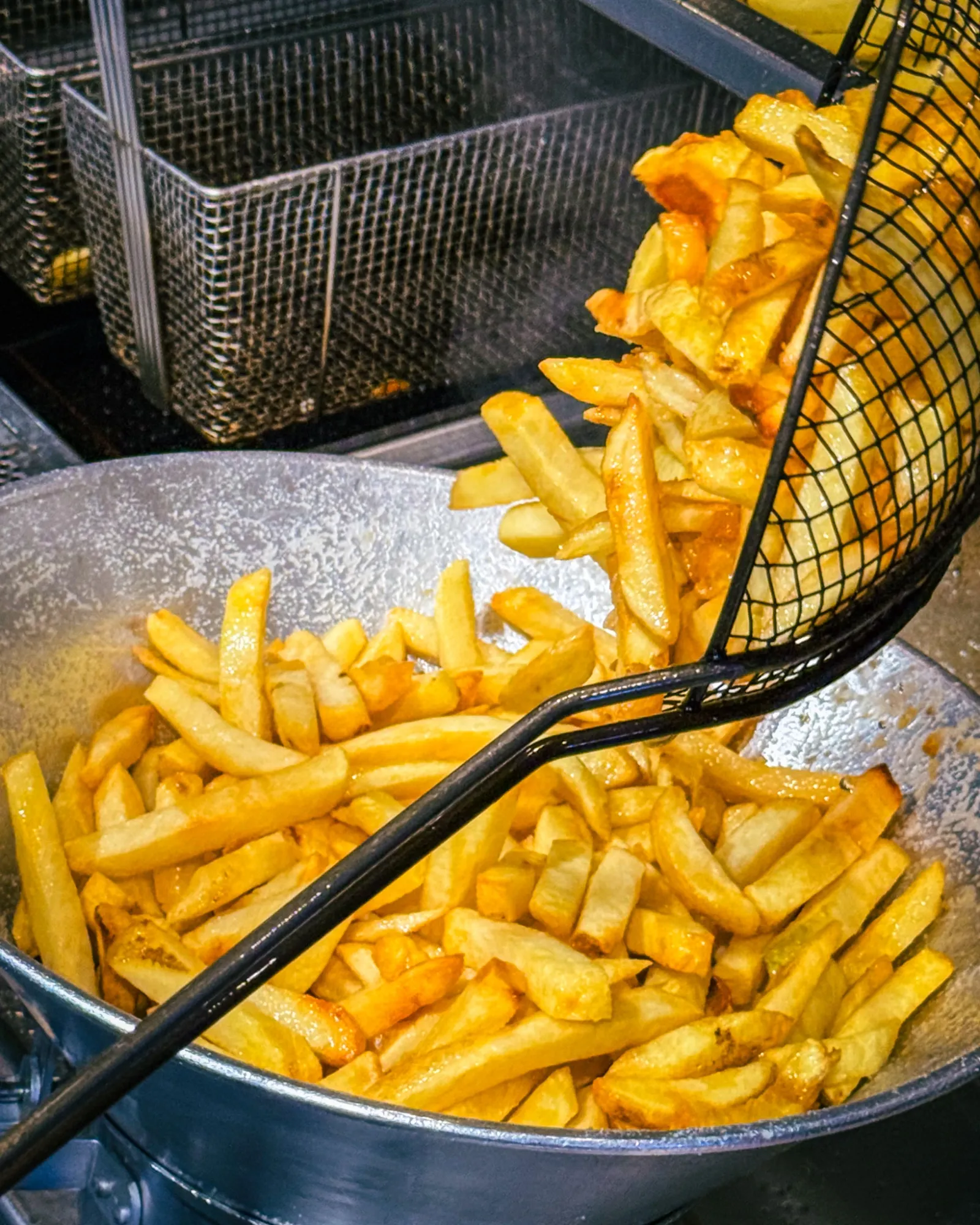
You can spot good fries by seven things: visible bits of potato skin, slight color differences between portions, oil that doesn't smell old, snacks cooked in a separate fryer, a line that keeps moving, a generous portion that doesn't fit neatly in the cone, and staff who can tell you where the potatoes come from.
You don't have to be a fry cook to see whether a shop knows what it's doing. Most of the signs are right in front of you, and you can check them while you wait in line.
Manneken Pis has been making fries for 35 years, ever since founder Albert opened his first shop in Utrecht. When we taste fries somewhere else, we still look for the same signs. These are the seven things we check, and you can check them too, wherever you grab your fries.
1. You can see bits of skin
Fresh potatoes are peeled and cut, but not perfectly. There's always a little skin left, especially on the ends of the fries. Those dark edges aren't sloppiness. They're proof that a real potato went into the fryer.
Factory fries usually don't have them, because in a fries factory the potato is peeled industrially right down to the core. So perfectly smooth, evenly yellow fries aren't a sign of quality. They're a hint that the fries came from a factory.
2. No two portions are exactly the same color
Potatoes change throughout the year. In the fall they're fresh from the field and contain more water. By spring, the starch has turned into sugar and they brown faster. If you work with fresh potatoes, every bag gives a slightly different result.
If you buy fries at the same shop twice and the color is exactly the same, the potato was standardized before it reached the shop. We fry by eye and adjust for every bag, instead of blindly following a timer.
3. The oil smells like nothing
This is the quickest test there is. Stand by the door and take a sniff.
Fresh frying oil hardly smells at all. Mostly, you smell potato. Oil that's been used too long smells sharp and a little fishy, and you can see it too: dark brown, thicker, with foam around the edges. That oil passes its flavor on to everything that goes into it, and fries get the worst of it because they have so much surface area.
A shop that changes its oil on time doesn't do it because it has to, but because otherwise it ruins the fries.
4. Snacks go into a separate fryer
This is where a fries shop and a snack bar part ways.
If croquettes, frikandellen (a Dutch minced-meat sausage) and cheese soufflés are fried in the same oil as the fries, breadcrumbs, fat and spices end up in that oil. The oil ages faster, and the fries start to taste like snacks. That can be nice, but it's not the fries you're supposed to get.
At our shops, the snacks have their own fryer. That's partly about flavor and partly practical: the fries taste clean, the oil lasts longer, and no breadcrumbs end up in the fry oil. Questions about allergens? Check our frequently asked questions about diets and allergens. Or download the allergen list (PDF) directly.
5. There's a line, and it keeps moving
A line at a fries shop tells you two things at once: there's demand, and nothing is sitting pre-cooked waiting for you.
What matters isn't the length of the line, but whether it moves. If it moves steadily, fries are being cooked in batches and yours will come straight out of the fryer. If the line stands still while orders are still going out, something else is going on.
What you don't want to see is a heat lamp with filled trays underneath. Fries have a shelf life of minutes, not hours. Why there's almost always a line at our shops is explained in why there's always a line at Manneken Pis.
6. The portion doesn't fit neatly in the cone
This isn't a quality requirement, but it's a good indicator of attitude. Shops that weigh every gram are watching their margins. Shops that fill the cone to the top are thinking about what the customer gets.
Our portions are generous. Our biggest cone is the Obelix, with almost a kilo (about 2 pounds) of fries. It really only exists because people kept asking for it.
7. Someone can tell you where the potatoes come from
Just ask. Which potato, where it's from, how often the fries are pre-fried.
At a place where fries are the main product, someone behind the counter will know the answer. At a place where fries are an afterthought, you'll get a shrug. Either answer tells you enough.
For the record: we use potatoes grown in Zeeland's clay soil. They're peeled by machine and cut fresh every day in our own production facility, pre-fried on site, and then finished to order.
Fries shop vs. snack bar: there's a real difference
A snack bar is a place where you get a fried meal, and fries are one of the options. A fries shop is a place where the fries are the product, and everything else comes second.
You can see the difference in how the place is set up. Two fryers instead of one. Potatoes processed daily instead of a freezer. Someone who adjusts the frying time instead of a program that runs out. That's not a judgment on snack bars, which have their own strengths. But it's not the same craft.
The short version
Walk into a fries shop and want to know quickly what to expect? These are the three fastest checks: smell the oil at the door, look for bits of skin on the fries, and see whether the snacks have their own fryer. Those three almost always predict the rest.
Want to know exactly what happens between the potato and the cone? Read Flemish fries vs. Dutch fries. And if you're not sure which sauce to choose, our sauce guide has you covered.
Frequently asked questions
How can I tell if fries are fresh or frozen?
Look at the skin and the shape. Fresh fries have visible bits of skin and irregular lengths. Frozen fries are smoother and more uniform. Break a thick fry in half: a fluffy center means fresh fries, a glassy or stretchy center means frozen.
Why do good fries have bits of skin on them?
Because fresh potatoes aren't peeled right down to the core the way they are in a fries factory. A little skin always stays on, and those bits of skin also add extra flavor.
Is old frying oil bad for you?
Oil that's used for too long gives off a sharp taste and breaks down. You'll definitely notice it in the flavor. Shops that change their oil on time mostly do it because otherwise the fries suffer.
Why are snacks fried in a separate fryer?
To keep breadcrumbs and spices from the snacks out of the fry oil. That keeps the fries tasting clean and makes the oil last longer.
What's the difference between a fries shop and a snack bar?
At a fries shop, fries are the main product and snacks come second. You can see that in separate fryers, fresh potatoes processed daily, and frying times adjusted by hand.
Read more of our articles
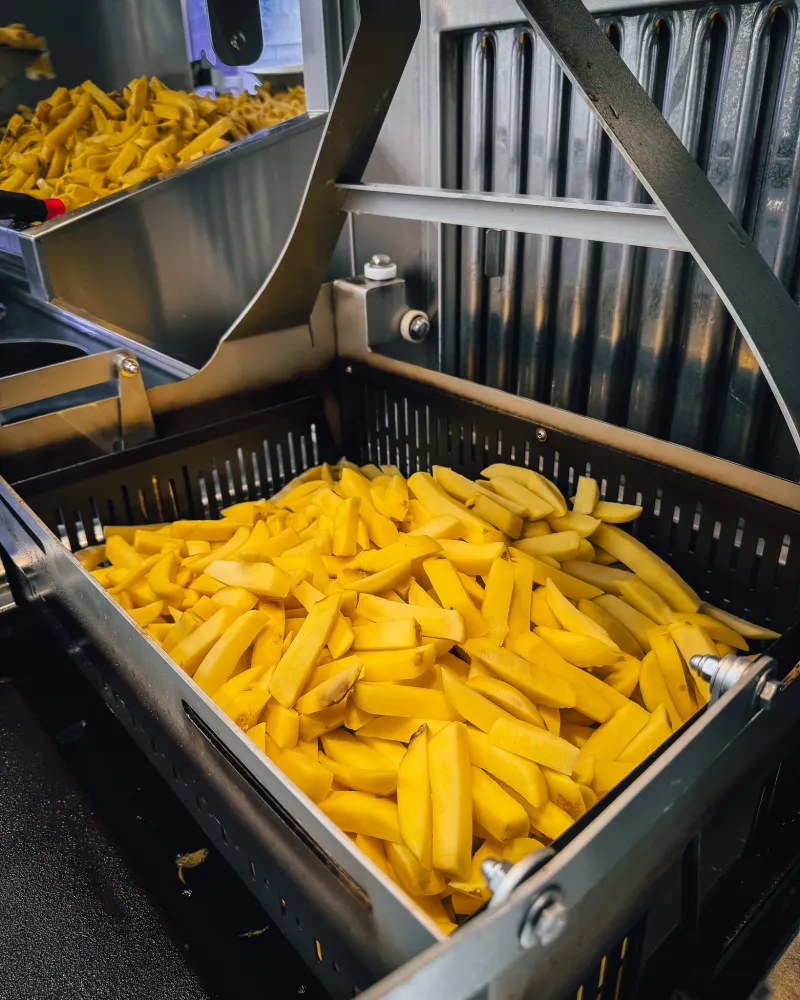
Flemish fries vs. Dutch fries: why the difference is in the fryer
Flemish fries are made from fresh potatoes and fried twice, never frozen. We explain what that does to the fries in your cone.
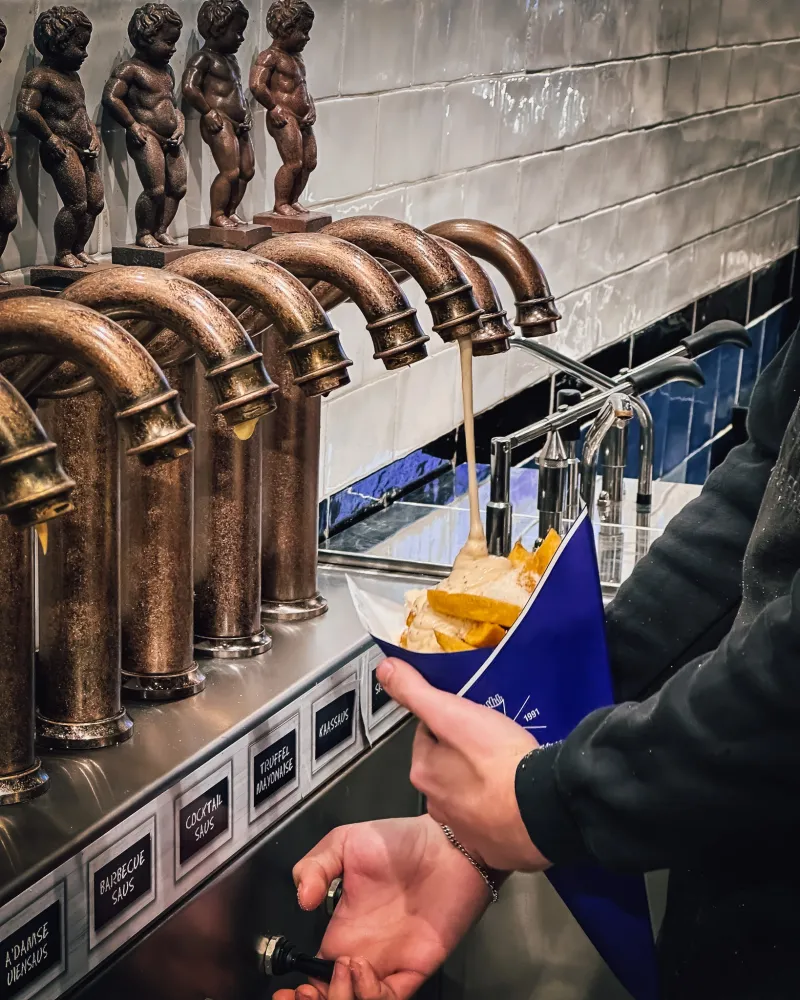
The sauce guide: which sauce goes with our fries
Fry sauce, andalouse, samurai or plain mayo? What each sauce is, where it comes from, and what it goes best with.
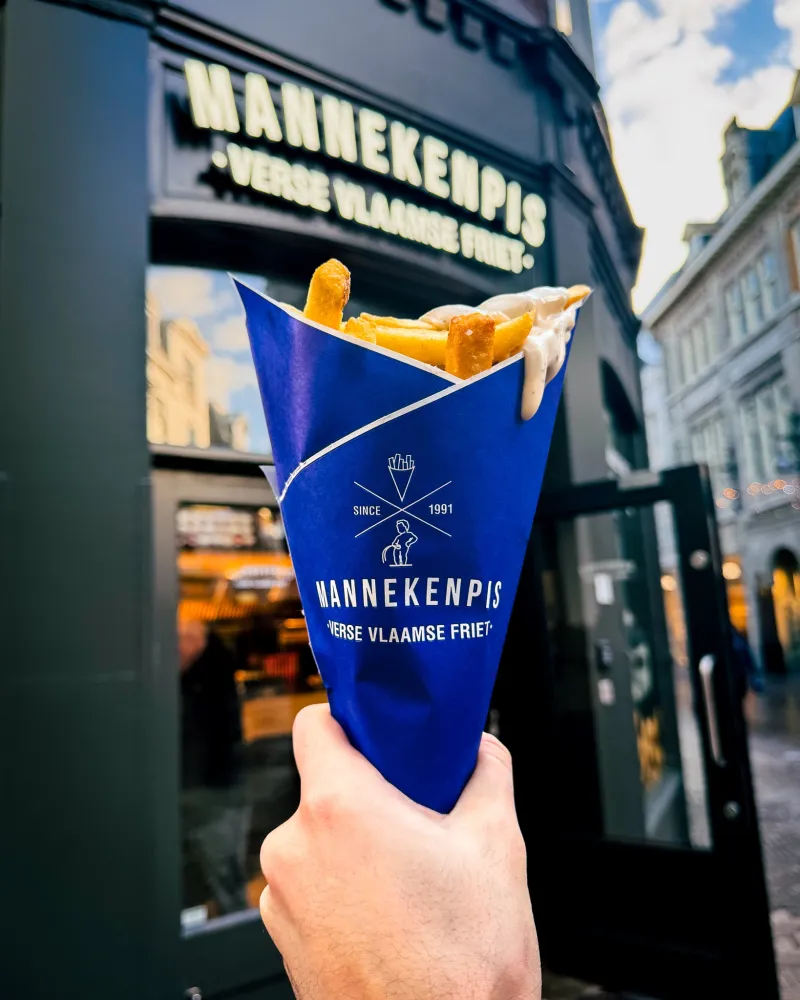
How good fries are made, according to Manneken Pis founder Albert
According to Albert van Beek, the founder of Manneken Pis, good fries are "crispy on the outside, soft on the inside, with a tasty sauce." It starts with a fresh potato, never one from the freezer. Albert opened his first fries shop in Utrecht 35 years ago; today Manneken Pis has locations in Utrecht, Amsterdam, Leidschendam and The Hague.