Flemish fries vs. Dutch fries: why the difference is in the fryer
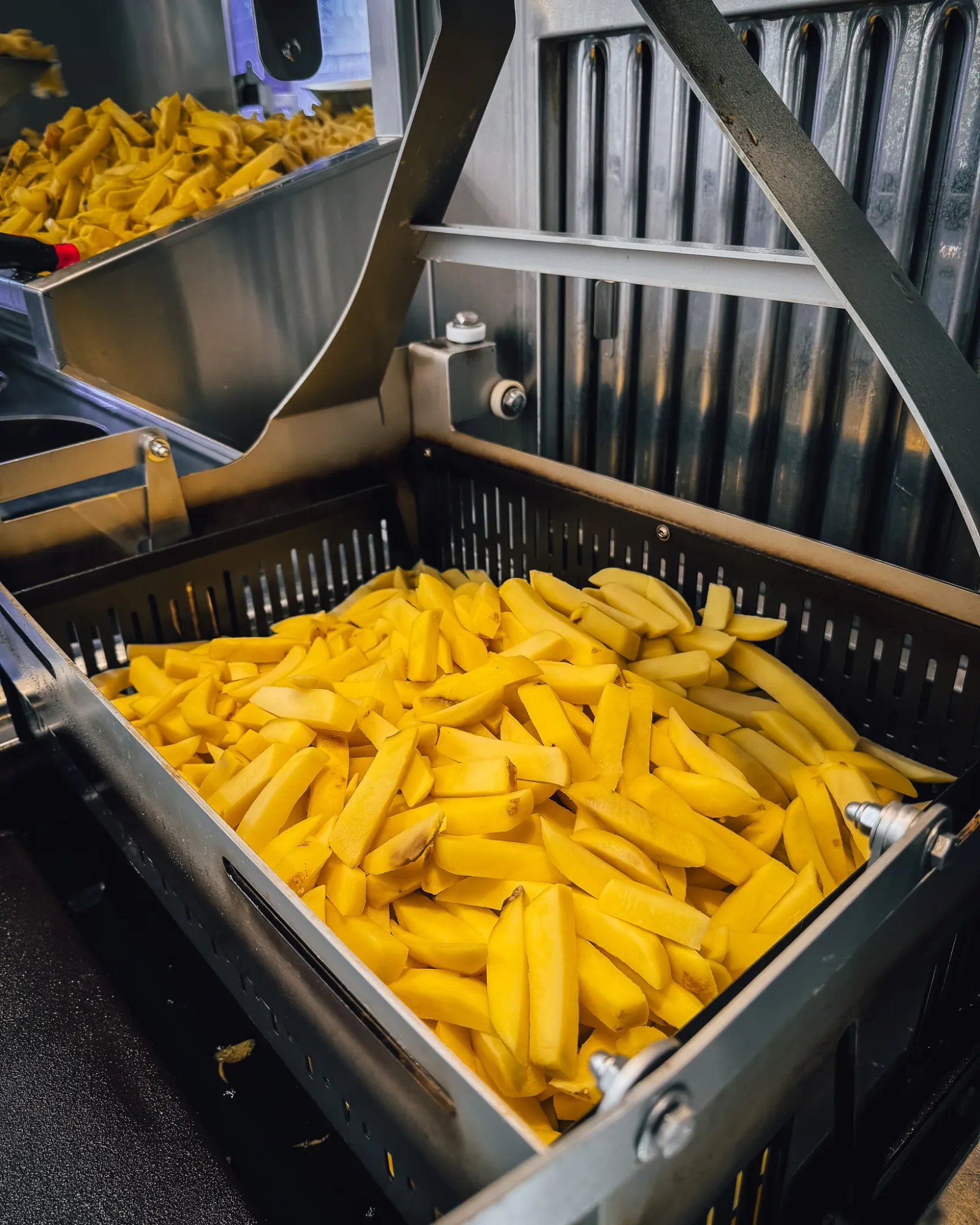
Flemish fries are fries made from fresh potatoes and fried in two stages: first at a low temperature, then at a high one. Dutch "patat" more often comes from the freezer and has already been pre-fried in a factory. So the difference isn't really about the country. It's about how fresh the potato is.
At Manneken Pis, we make Flemish fries. That's not a marketing term we picked up somewhere. It's a way of working that starts every morning in our own production facility, with bags of potatoes still sticking together with clay. Below, we explain what happens next, and why you can taste it in your cone.
What are Flemish fries?
Flemish fries, also known as Belgian fries, have three defining features.
The potato is fresh. The fries are cut fresh, not weeks in advance.
They're fried twice: once to cook the potato, once to make it crispy.
They're on the thick side. Flemish fries aren't thin sticks, but sturdy batons with a soft center.
By "patat", many Dutch people mean the snack bar version: a potato that's cut in a factory, pre-fried industrially, frozen, and only gets its second fry at the snack bar. That can taste fine, but fresh fries have a softer center under a crispy crust.
Why are fries fried twice?
In the first fry, the fries go into the oil at about 140 °C (284 °F). At that temperature, the potato cooks from the inside out. The starch absorbs water and softens, and the outside dries slightly without browning. Then the fries come out to cool.
Letting the fries cool is the step that does the most work and gets the least attention. While they rest, moisture from the outer layer moves inward, and a dry layer forms on the outside. That layer later becomes your crust.
In the second fry, the temperature goes up to 175 °C (347 °F). Now something different happens: the moisture left in the outer layer evaporates all at once, the sugars brown, and a thin crust forms around a center that's already cooked. That's the combination you look for in good fries and miss in mediocre ones: crispy outside, fluffy inside.
Fry them only once, and the fries have to cook and brown at the same time. That doesn't work. You end up with either brown fries with a hard center, or pale fries that go limp as soon as they hit the cone.
Pre-frying in a factory vs. pre-frying on site
At Manneken Pis, the fries are pre-fried on site every day. When you order, we finish fries that were cut that same day and had their first fry that same day. That's also why there's often a line: everything is finished to order.
With frozen fries, the first fry happens weeks or months earlier in a factory. The fries are then frozen and shipped. To help them survive all that, the industry often adds a thin coating that keeps them crispy. That works fine, but it solves a problem we don't have: our fries aren't frozen and shipped for weeks.
The difference is in the center. Fresh fries have a center that falls apart when you break one open. Frozen fries more often have a glassy or slightly rubbery center, because freezing damages the potato's cell structure.
The potato does more than half the work
We use potatoes grown in Zeeland's clay soil. Clay holds water better than sand, so potatoes grown in clay have a higher dry matter content and a firmer structure. For fries, that's exactly what you want: less water to fry out, more potato left over.
On top of that, a potato is a crop, not a factory product. Potatoes in April fry differently than potatoes in October. The starch changes during storage, so the frying time changes too. That's why we adjust for every bag instead of setting a fixed time on a timer.
It's also why not every cone of fries we serve is exactly the same color. Some people think that's sloppy. It's the exact opposite: if fries always look identical, the potato was standardized before it ever reached the fryer.
How to tell fresh fries from frozen
Here are four things you can check as soon as you get your fries.
You see bits of skin. Fresh potatoes aren't peeled right down to the core, so a little skin stays on. With factory fries, it's removed completely in an industrial process.
The shape is irregular. Different lengths, the occasional short piece. A potato simply isn't a block.
The fries are still crispy after a few minutes. Fresh fries with a real crust hold up longer in the cone than fries that get their crunch from a coating.
You can break one in half. Take a thick fry and snap it. If the center is fluffy, the potato was cooked properly. If it stretches, something went wrong between the field and the fryer.
Why we keep doing it this way
Fresh fries are more expensive, more labor-intensive and less predictable than frozen ones. That's the whole reason so many places don't use fresh fries. Someone has to cut, someone has to pre-fry, and someone has to notice that this bag of potatoes needs ten seconds longer than the last one.
We're not a snack bar. We're a fries shop, and the fries aren't a side dish to the snacks. They're the main product. That makes the choice a lot simpler.
Read more about how we check that quality every day in How good fries are made, according to Albert. Want to know how to spot good fries at a place you don't know? How to spot good fries will help you out. And which sauce to pick is covered in our sauce guide.
Frequently asked questions
Are Flemish fries the same as Belgian fries?
Yes. Both terms refer to the same method: fresh potatoes, cut fresh and fried twice. "Flemish" refers to Flanders, the region where this way of frying comes from.
Why are Flemish fries thicker than regular fries?
Because the ratio between crust and center is different. A thicker cut leaves room for a soft, fluffy center under a thin crust. With very thin fries, there's barely any center left.
What's the difference between "friet" and "patat"?
Linguistically, nothing: they're two Dutch words for the same thing. In practice, people tend to use "friet" for the fresh, double-fried kind and "patat" for the snack bar version from the freezer. So the word says little about quality: even if you order "patat" at our shops, you get fresh Flemish fries.
Do you pre-fry the fries fresh every day?
Yes. The potatoes are cut fresh daily in our own production facility and pre-fried on site. No frozen fries are involved.
What oil do you fry your fries in?
In 100% plant-based liquid frying oil. It's neutral in flavor, so you taste the potato, not the oil. We pre-fry at about 140 °C (284 °F) and finish at about 175 °C (347 °F). How often we change the oil is covered in our FAQ about fries and quality.
Read more of our articles
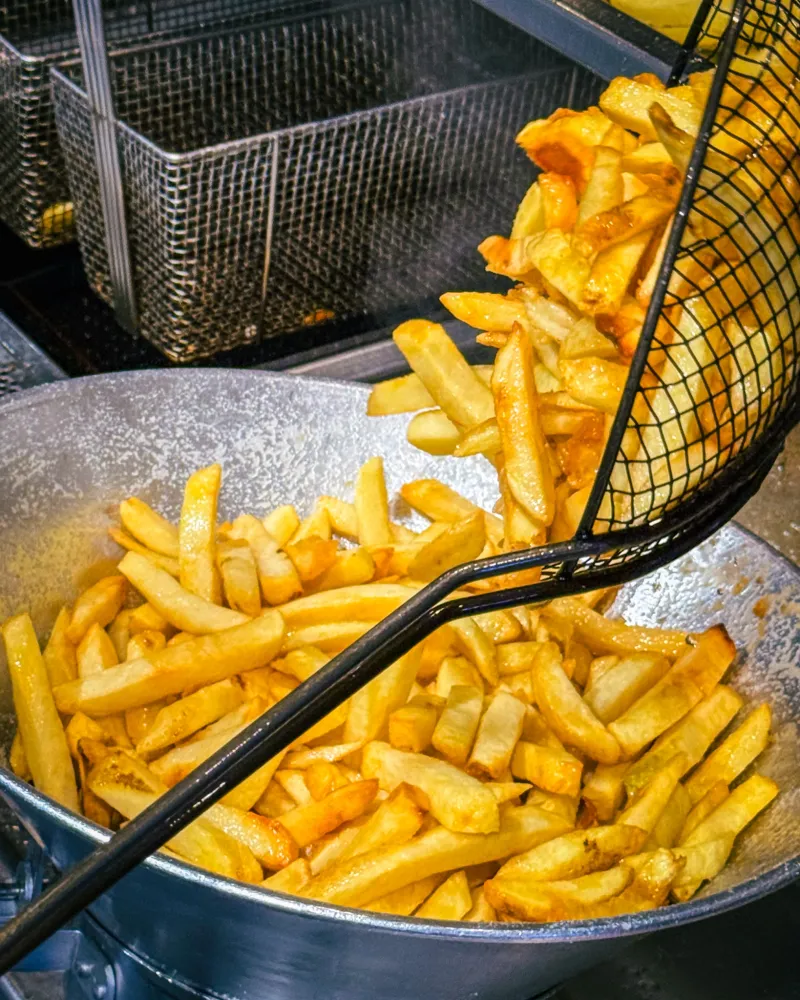
How to spot good fries: 7 things that give a fries shop away
Fresh or frozen? Seven things you can spot at any fries shop in 30 seconds, from the smell of the oil to a separate fryer for snacks.
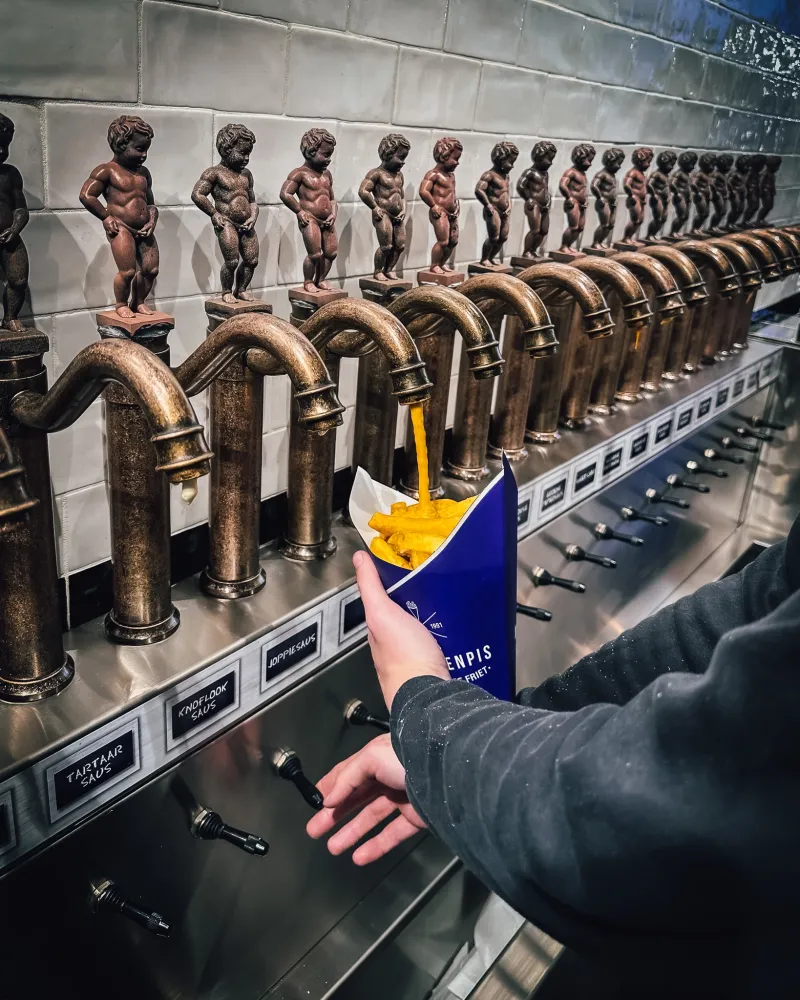
Fresh fries from Zeeland clay to paper cone: our potato's journey
How does a potato from Zeeland's clay soil become a crispy cone of fries? Follow the journey from the field to fresh cutting and frying by eye.
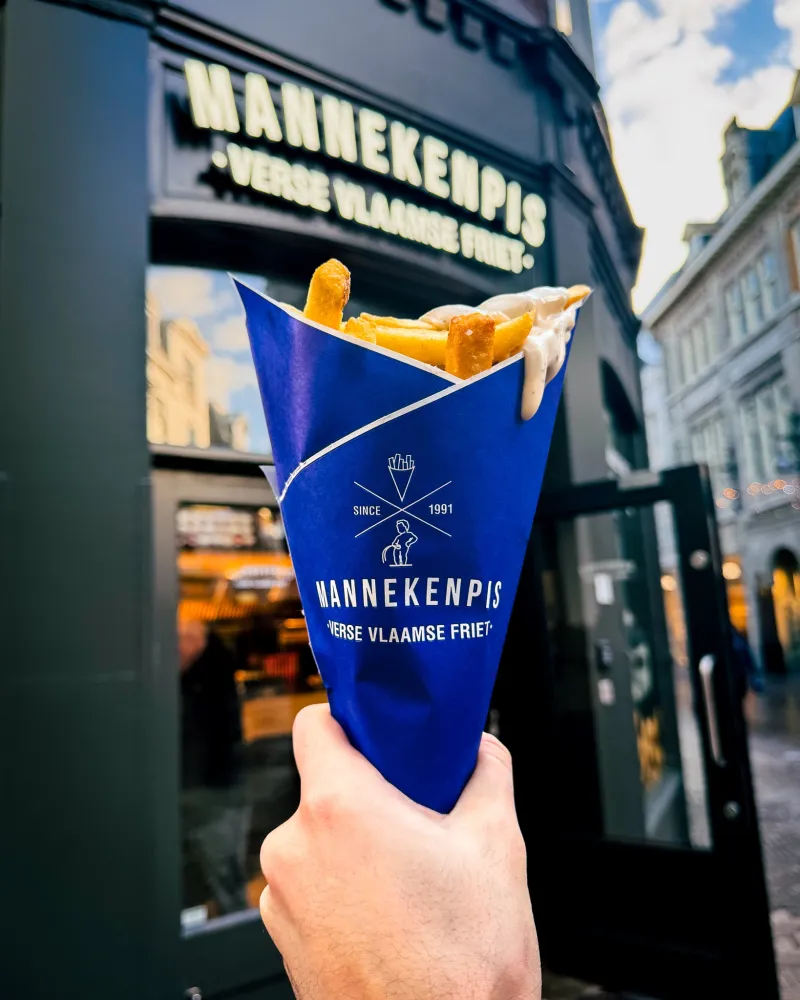
How good fries are made, according to Manneken Pis founder Albert
According to Albert van Beek, the founder of Manneken Pis, good fries are "crispy on the outside, soft on the inside, with a tasty sauce." It starts with a fresh potato, never one from the freezer. Albert opened his first fries shop in Utrecht 35 years ago; today Manneken Pis has locations in Utrecht, Amsterdam, Leidschendam and The Hague.