Fresh fries from Zeeland clay to paper cone: our potato's journey
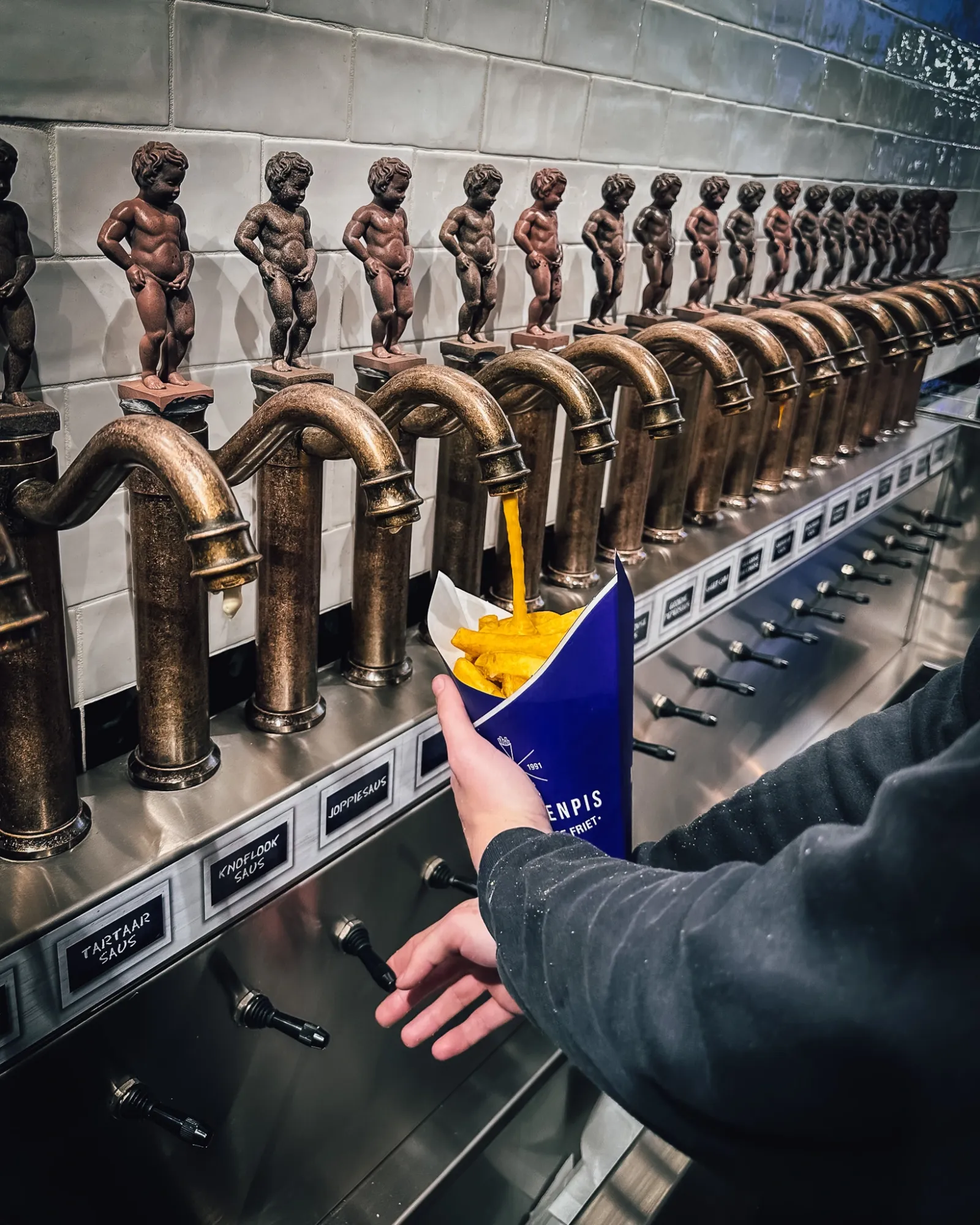
At Manneken Pis, the potato's journey starts in the clay soil of Zeeland, a province in the southwest of the Netherlands, where potatoes grow with a high dry matter content and a firm structure. After the harvest, the potatoes are washed, peeled by machine and cut fresh in our own production facility, then pre-fried at our locations. Because a potato's starch content changes throughout the year, we fry by eye, not by kitchen timer. Only after the second, final fry do the fresh, crispy fries land in your cone.
Good fries don't start in the fryer, or even at the supplier. They start in the soil. Most people never think about it, but a potato is a natural product, not a standardized factory item.
At Manneken Pis, we work every day with bags of potatoes that arrive at our own production facility sometimes still sticking together with clay. Below, we take you along on the journey our potato makes: from the Zeeland polder to the moment you pull the first fry out of your cone.
Why the journey starts in Zeeland's clay soil
Not every potato is suited to making fries. We deliberately choose potatoes from Zeeland's clay soil. Founder Albert is clear about it: "I want the best. Period."
Clay holds water very differently than sand. Potatoes growing in heavy clay have to work harder. The result?
Higher dry matter content: The potato contains less water and more actual potato.
Firmer cell structure: The center of the potato stays nice and compact after cooking or frying.
Richer flavor: Less water in the potato means less moisture to evaporate during frying, so the authentic potato flavor is preserved.
When the bags arrive at our own production facility, you can still see and smell the countryside. From there, the fresh fries go to our locations in Utrecht, Amsterdam, Leidschendam and The Hague.
The season sets the frying time, not the clock
A potato that comes out of the field in October fries very differently from a potato that comes out of storage in April. The longer a potato is stored, the more its starch slowly turns into sugar. That directly affects how fast it browns and how long it needs in the oil.
In the industry, that's often corrected with extra processing or additives, so every fry always looks exactly the same. We don't do that.
That's why our fry cooks work by eye and by feel. Is the potato a bit moister in the fall? Then the first fry needs a little more time. Has spring arrived? Then we adjust the temperature to keep the sugars from browning too fast. It makes the craft more challenging, but it means the flavor is always right.
Cut fresh in our own production facility (never frozen)
At many restaurants, the fries come out of a freezer bag. Those fries were cut, pre-fried and frozen in a factory weeks earlier. Freezing damages the potato's cell structure, which leads to a glassy or rubbery center.
At Manneken Pis, we skip that step entirely:
Washing and processing: The potatoes are washed in our own production facility.
Peeling and cutting: The potatoes are peeled by machine and cut fresh into thick batons. Because they aren't peeled right down to the core, you'll often see small bits of skin on the ends. That's not sloppiness, but visible proof that we work with real potatoes.
No additives: The cut fries go straight to our locations, without preservatives or batter coatings.
The first fry: cooking at a low temperature
Once the fries are cut, they go into the fryer for the first time. We call this pre-frying.
Temperature: About 140 °C (284 °F).
Goal: To cook the potato from the inside out. The starch absorbs the moisture and softens, while the outside dries slightly without browning.
After pre-frying, the fries rest. This resting step is essential: moisture from the outer layer moves inward, and a thin, dry layer forms that later turns into the crispy crust.
The second fry: the perfect crispy crust
Only when you're at the counter placing your order do the fries go into the oil for the second time:
Temperature: About 175 °C (347 °F).
Goal: Within a few minutes, the last bit of moisture on the outside evaporates. A golden, crispy crust forms around a soft, fluffy center.
Because we fry only in 100% plant-based liquid oil, the potato flavor stays clean and light. And because our snacks are fried in a separate fryer, no breadcrumbs or spices end up in your fries.
The finale: into the cone
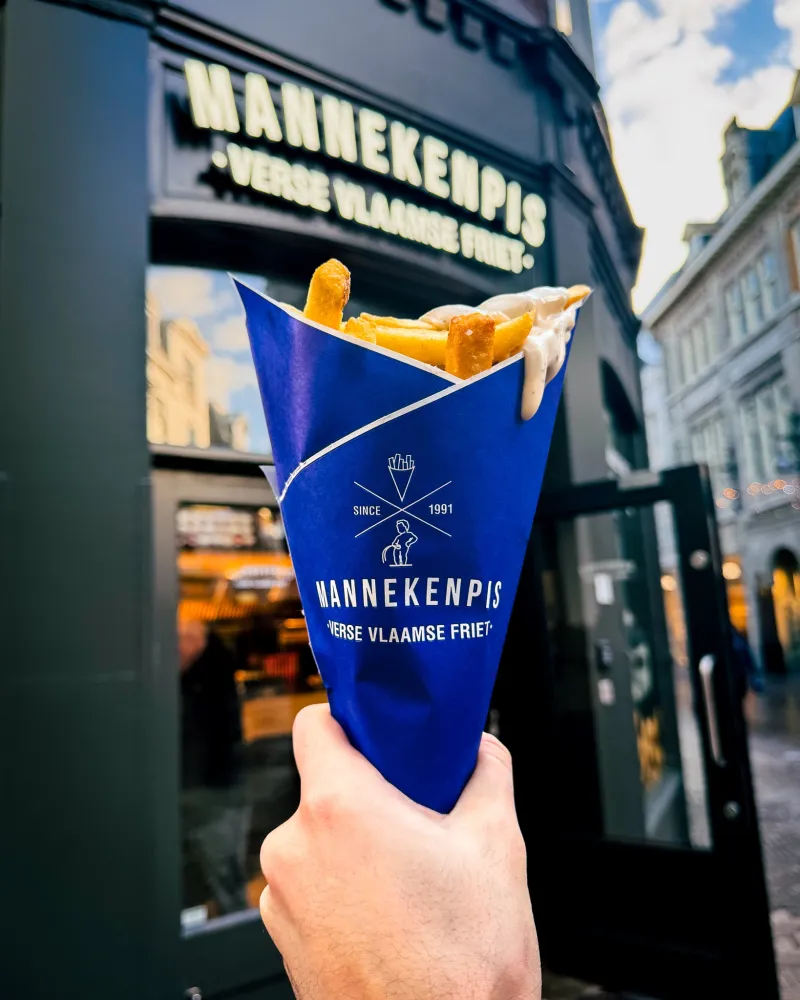
After the final fry, the fries are briefly tossed, lightly salted and scooped straight into a paper cone. Because the fries have built up a natural crust, they stay crispy for minutes, even at the bottom of the cone.
The result of this whole journey? Fries the way fries are meant to be: thick-cut, crispy on the outside, fluffy on the inside, and full of authentic flavor.
Want to test whether you can recognize fresh fries yourself? Read how to spot good fries. Not sure which of our more than 20 sauces goes best with your cone? Check out our complete sauce guide. Why we fry twice is explained in Flemish fries vs. Dutch fries. Curious why there's often a line at our shops? Read why there's always a line at Manneken Pis. And how it all began is told in our story.
Frequently asked questions
Why does Manneken Pis use potatoes from Zeeland's clay soil?
Clay soil produces potatoes with a higher dry matter content and less water. When fried, that gives you a firm, fluffy center and a crispy crust.
Have Manneken Pis fries ever been frozen?
No. Our potatoes are delivered fresh, peeled by machine and cut fresh every day in our own production facility, pre-fried on site and finished to order. No freezer is involved.
Why isn't every cone of fries exactly the same color?
Because a potato is a natural product whose starch and sugar content changes with the seasons. We fry by eye and adjust the frying time for every bag, instead of relying on factory processes.
Why are there sometimes bits of skin on the fries?
Because our potatoes are peeled by machine, but not right down to the core. They're then cut fresh in our own production facility. The bits of skin show that the fries are made from real, unprocessed potatoes, and they add extra flavor.
Read more of our articles
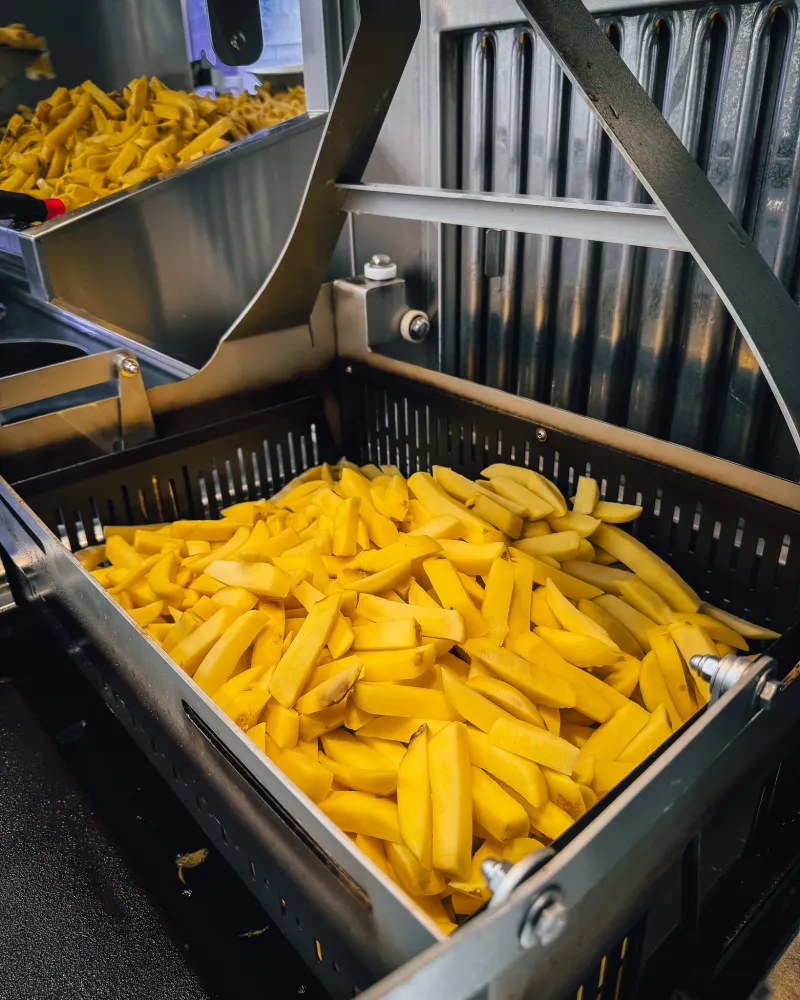
Flemish fries vs. Dutch fries: why the difference is in the fryer
Flemish fries are made from fresh potatoes and fried twice, never frozen. We explain what that does to the fries in your cone.
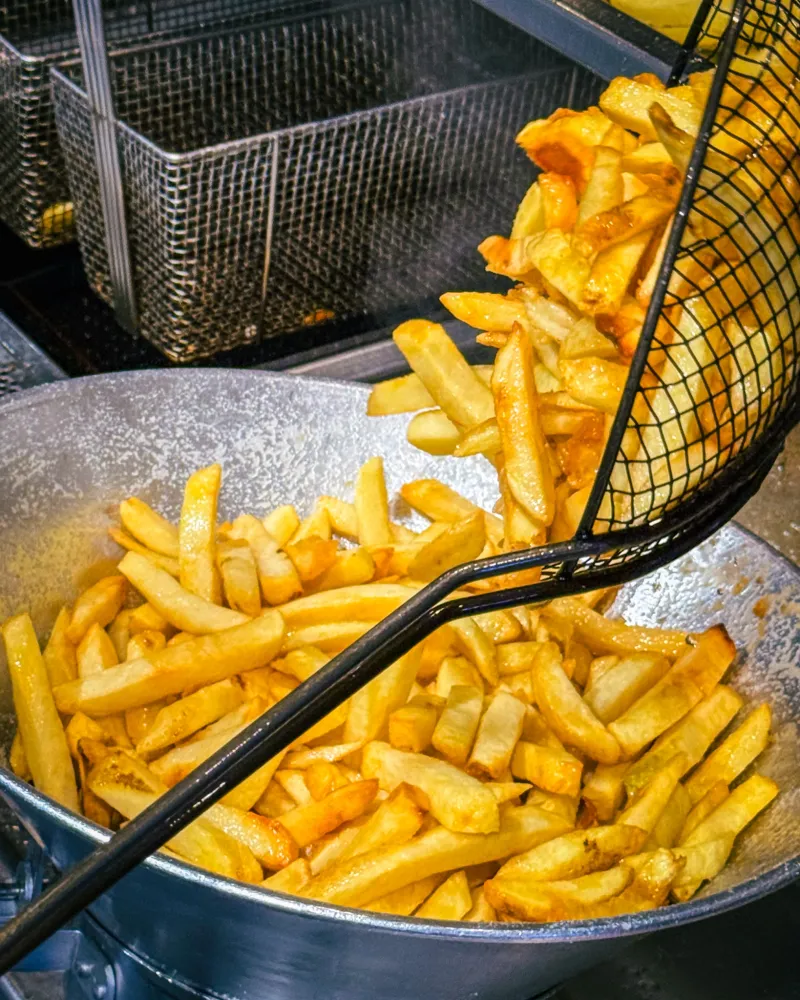
How to spot good fries: 7 things that give a fries shop away
Fresh or frozen? Seven things you can spot at any fries shop in 30 seconds, from the smell of the oil to a separate fryer for snacks.
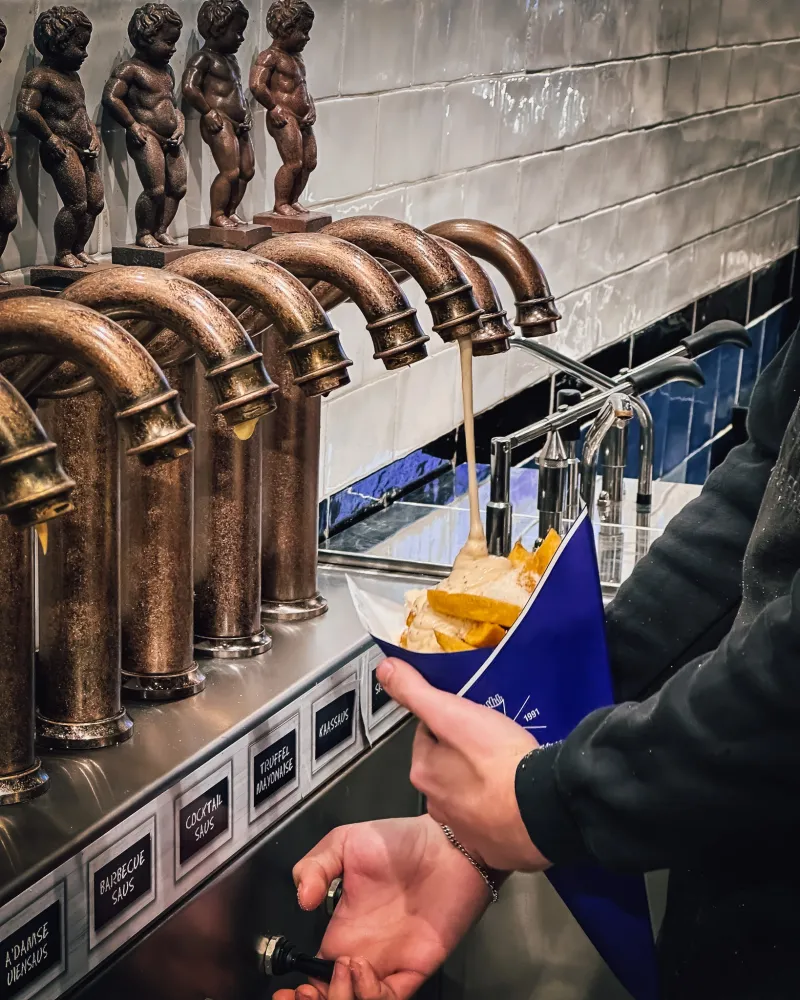
The sauce guide: which sauce goes with our fries
Fry sauce, andalouse, samurai or plain mayo? What each sauce is, where it comes from, and what it goes best with.
How good fries are made, according to Manneken Pis founder Albert
According to Albert van Beek, the founder of Manneken Pis, good fries are "crispy on the outside, soft on the inside, with a tasty sauce." It starts with a fresh potato, never one from the freezer. Albert opened his first fries shop in Utrecht 35 years ago; today Manneken Pis has locations in Utrecht, Amsterdam, Leidschendam and The Hague.