How good fries are made, according to Manneken Pis founder Albert
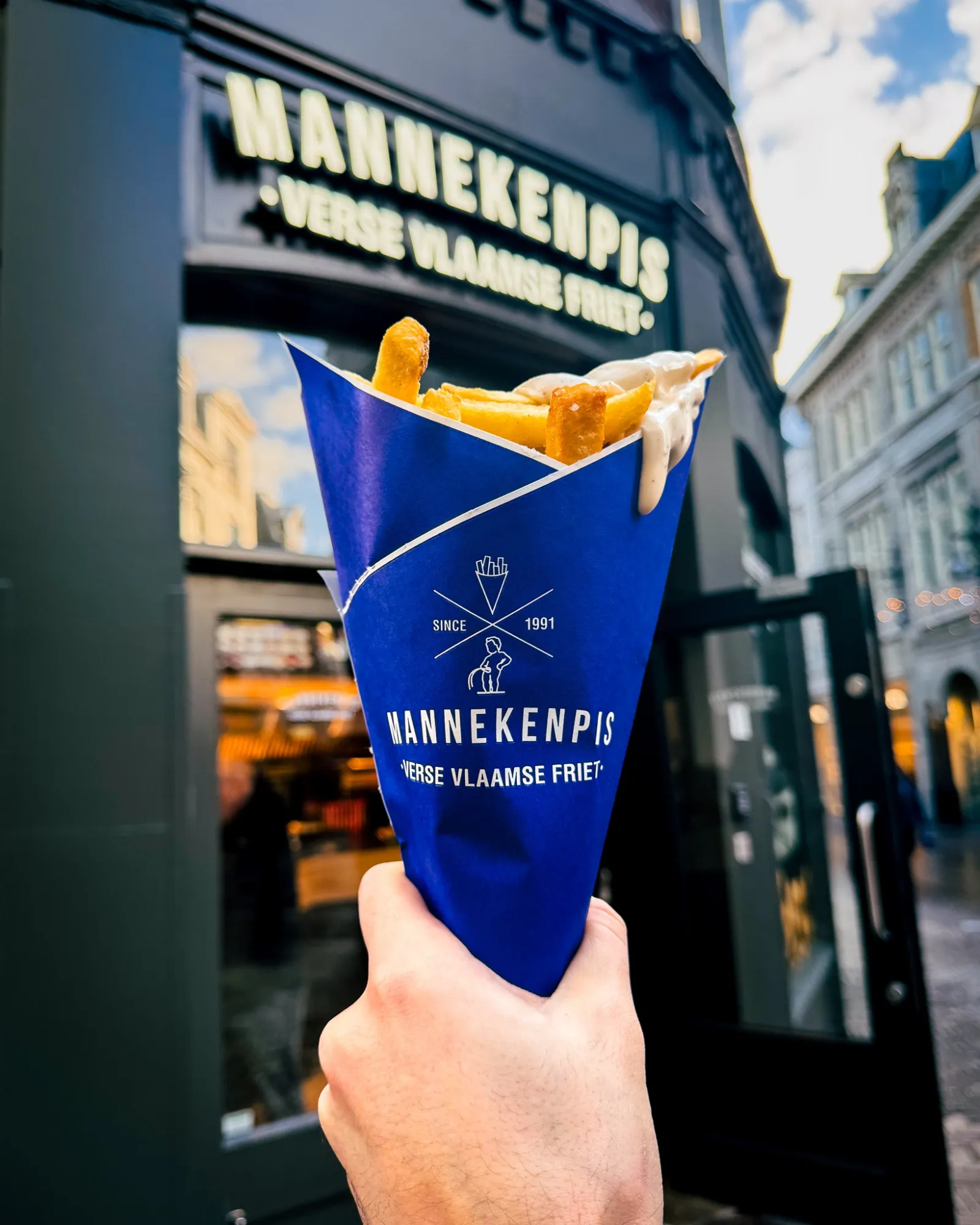
According to Albert van Beek, the founder of Manneken Pis, good fries are "crispy on the outside, soft on the inside, with a tasty sauce." The difference starts with the potato: fresh fries made from a good potato that never came out of a freezer. Albert opened his first fries shop in Utrecht 35 years ago. Today Manneken Pis has locations in Utrecht, Amsterdam, Leidschendam and The Hague.
Albert isn't a chef or a trained fry cook. He's an entrepreneur, and the potato became his craft. In this article he shares how he got started, what 35 years taught him about fries, and how you can tell good fries from bad ones.
A "for rent" sign on an old fries shop in Utrecht
Albert worked for an entrepreneur who ran all kinds of businesses. He did the bookkeeping, had an office on the Neude square in Utrecht, and picked up the art of running a business by watching.
"At some point I thought: I can do that too."
On a lunchtime walk, he saw a real estate agent putting up a "for rent" sign at an old fries shop on Vredenburg. Within an hour, the place was his. The building had to be completely refitted, and Albert stayed with his employer for another year. His office was a five-minute walk away, so he could stop by several times a day.
The first lesson came fast.
"I thought one kilo of potatoes would make three portions. It turned out to be one and a half."
One kilo (about 2.2 pounds) of fresh potatoes gives you roughly half a kilo of fries. Two years later, Albert opened his second shop, on the Damrak in Amsterdam.
Choosing the right spot turned out to be just as important as the fries.
"You need a lot of foot traffic. Lots of people out shopping."
Three days of potato school
In the beginning, Albert knew very little about potatoes. So he took a three-day potato course in Barneveld.
"I wanted to know everything about that potato, because it's my main product."
He learned purchasing on the job. As a small shop, he bought at the market and directly from farmers. At first the potatoes were good, but over time the quality dropped while the price went up. His conclusion: the more you buy, the better you can control quality.
For more than 30 years now, Manneken Pis has worked with the same trusted partner in Zeeland, a province in the southwest of the Netherlands. Albert gives them one instruction.
"I want the best. Period. Sometimes that costs a bit more, but I don't care."
Why Zeeland's clay soil is so good for fries is explained in From Zeeland clay to paper cone.
Fresh fries cost about the same per kilo as frozen fries
Manneken Pis has made fresh fries since day one. Frozen fries were never a serious option for Albert.
"It just has to be fresh. It has to be the top product. Period."
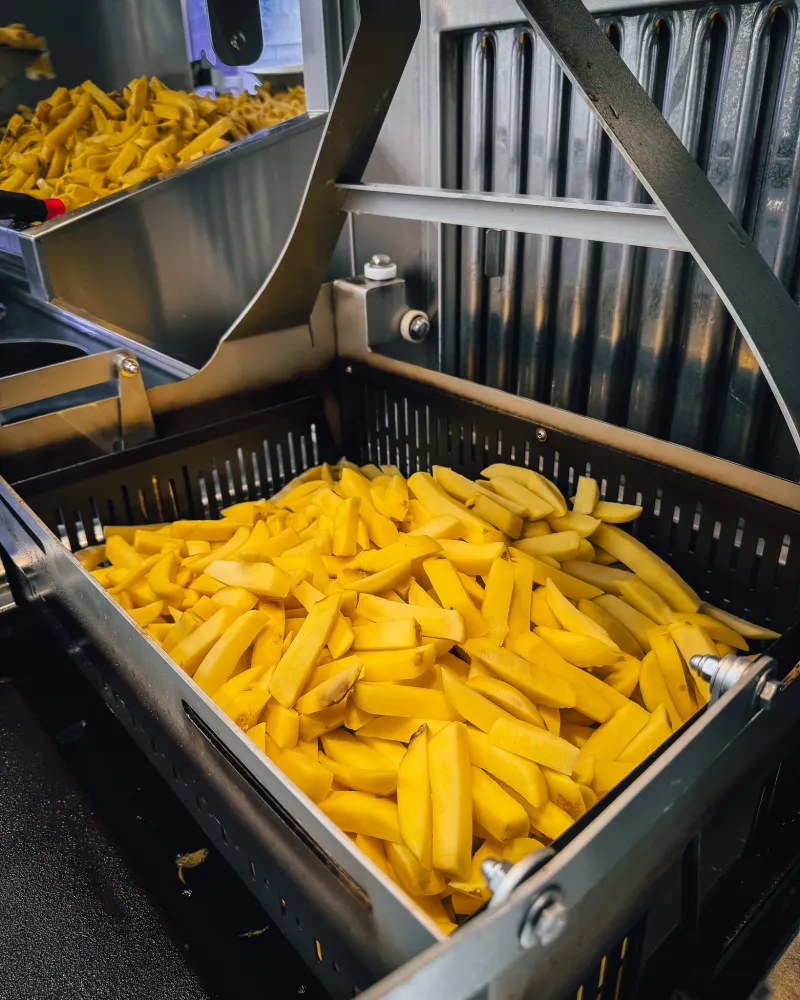
The math is less simple than you might think. A fresh potato is cheaper to buy than frozen fries. But it still has to be cleaned, cut and pre-fried, and that takes oil, fryers and people.
"In the end you arrive at the same price as a kilo of frozen fries. But yours are fresh."
What happens in the fryer during the first and second fry is explained in Flemish fries vs. Dutch fries.
Why 'Flemish' on the sign doesn't mean much
More and more fries shops call themselves Flemish or artisanal. According to Albert, that label says very little. There's only one way to recognize good fries:
"By ordering them."
Cutting potatoes fresh isn't a guarantee either, he says.
"That says nothing. You need a good potato."
A shop can work with fresh potatoes and still serve mediocre fries if the potato itself isn't good. Want to learn what to look for yourself? Read how to spot good fries.
A specialist in one product
When Albert started out, most shops sold a little bit of everything: snacks, ice cream and orange juice, with posters on the wall. Albert saw the market heading the other way.
"You have to become a specialist in something. But then you have to be in really good locations."
That combination of one product and a strong location turned out to be the right choice, and many shops have since followed. Manneken Pis doesn't aim for the high end, though. Albert wants to make good fries for everyone walking by, not for a small group.
How do the fries taste the same at every location?
New employees learn the craft in the shop, working alongside colleagues who have done it for years.
"That's really the best school. Not off in some classroom, but standing right there with the team."
If something starts to slip, the office steps in. Albert uses salt as an example.
"One person adds this much, the next a little more, and then a little more again."
Each city also has a manager who visits the locations every day.
For Albert, one rule applies: the customer is king. Anyone with a complaint gets a fresh cone of fries right away, no questions asked.
The line on the Damrak
The real breakthrough came in 2005, when Frietopia, a Dutch fries review guide, named Manneken Pis the best fries shop in the Netherlands. It went on to win that title eight times: from 2005 through 2007 and from 2009 through 2013. Sales on the Damrak in particular took off in the years that followed.
"That's when I realized what could happen in Amsterdam once you got a bit of a name."
The line you see on social media today was already there back then. Since 2024, hosts in bowler hats have been managing it. Before that, the line went left one day and right the next, and blocked the sidewalk for pedestrians. How the line works today is explained in why there's always a line at Manneken Pis.
The brand's reputation now reaches far beyond the Netherlands. Manneken Pis receives franchise requests from abroad every week, from Iraq to Brazil and the United States. The answer is always the same: Manneken Pis does not franchise. Read more on our franchise and collaboration page.
Belgian names for the cones
Albert chose the name Manneken Pis because he wanted a Belgian name that people would remember.
"It has nothing to do with fries. But I thought: if I use that name, people will remember it."
The portion sizes got Belgian and comic book names too, such as Urbanus, after the Flemish comedian, and Obelix, the biggest cone. In Amsterdam, small, medium and large are also listed for first-time visitors and tourists.
Albert's own order
Albert always orders a small portion with satay sauce (peanut sauce) and Joppie sauce (a sweet Dutch curry-onion sauce), each served on the side. He never mixes them.
"They don't go well together. I dip a few fries in the Joppie sauce first, then a few in the peanut sauce."
He likes the fries themselves plain.
"I like them best when they're nice and crispy, not soaked in sauce."
Somewhere in his photo album is a picture of him sitting on a curb in Utrecht, with two tubs of sauce on his knees and the cone of fries in between.
Manneken Pis has more than 20 sauces. Which sauce goes with which fries is covered in our sauce guide.
35 years of Manneken Pis
In November 2026, Manneken Pis celebrates its 35th anniversary with a free fries day in Utrecht, where it all began. Ask Albert what good fries are after 35 years, and he keeps it short.
"Crispy on the outside, soft on the inside, with a tasty sauce."
Frequently asked questions
Who founded Manneken Pis?
Albert founded Manneken Pis 35 years ago with a fries shop in Utrecht. He still owns the company. Manneken Pis has locations in Utrecht, Amsterdam, Leidschendam and The Hague.
Where was the first Manneken Pis?
In Utrecht, at Vredenburg 154-155. The Damrak location in Amsterdam opened two years later.
What are good fries, according to the founder of Manneken Pis?
Crispy on the outside, soft on the inside, with a tasty sauce. According to Albert, it always starts with a good, fresh potato.
Does Manneken Pis use frozen fries?
No. Manneken Pis has used fresh potatoes since day one. According to Albert, fresh fries end up costing about the same per kilo as frozen fries: the potato is cheaper, but processing it takes labor and equipment.
How many fries do you get from a kilo of potatoes?
About half a kilo, or roughly one and a half portions.
How can you tell real Flemish fries?
By tasting them. According to Albert, a label like "Flemish" or "artisanal" says very little, and cutting potatoes fresh is no guarantee either. It all comes down to a good potato.
Does Manneken Pis offer franchises?
No. Manneken Pis receives requests from abroad every week, but does not franchise.
What does the founder of Manneken Pis order himself?
A small portion with satay sauce and Joppie sauce, each on the side. Albert prefers to dip his fries rather than pour sauce over them, so they stay crispy.
Read more of our articles
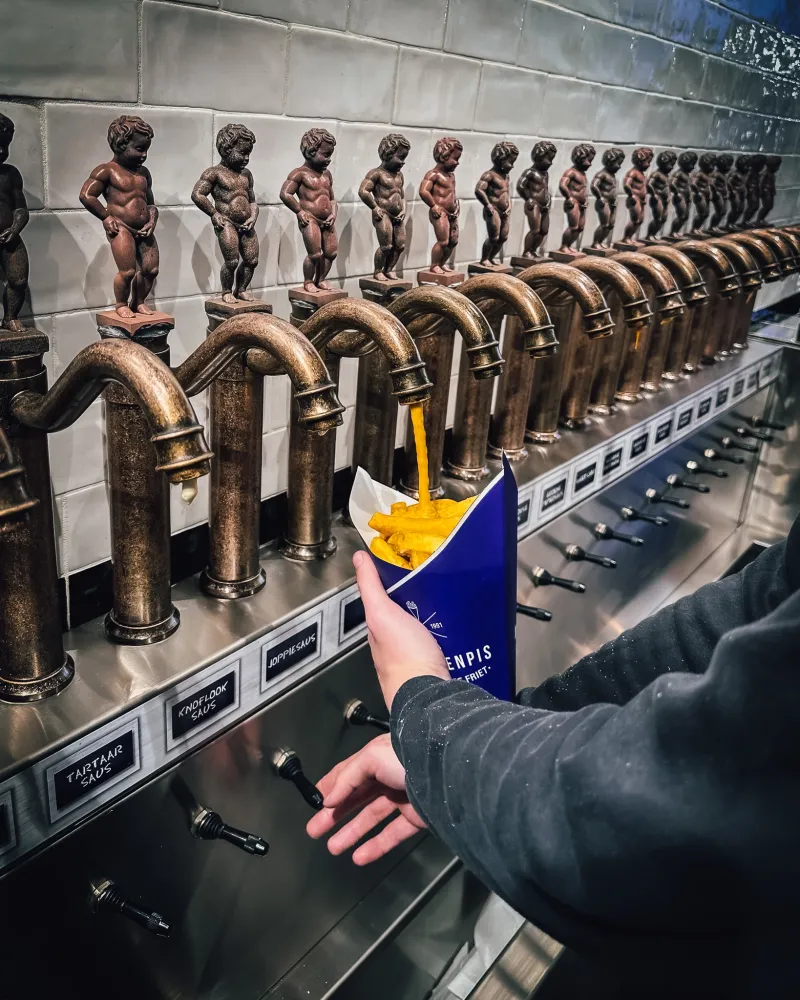
Fresh fries from Zeeland clay to paper cone: our potato's journey
How does a potato from Zeeland's clay soil become a crispy cone of fries? Follow the journey from the field to fresh cutting and frying by eye.
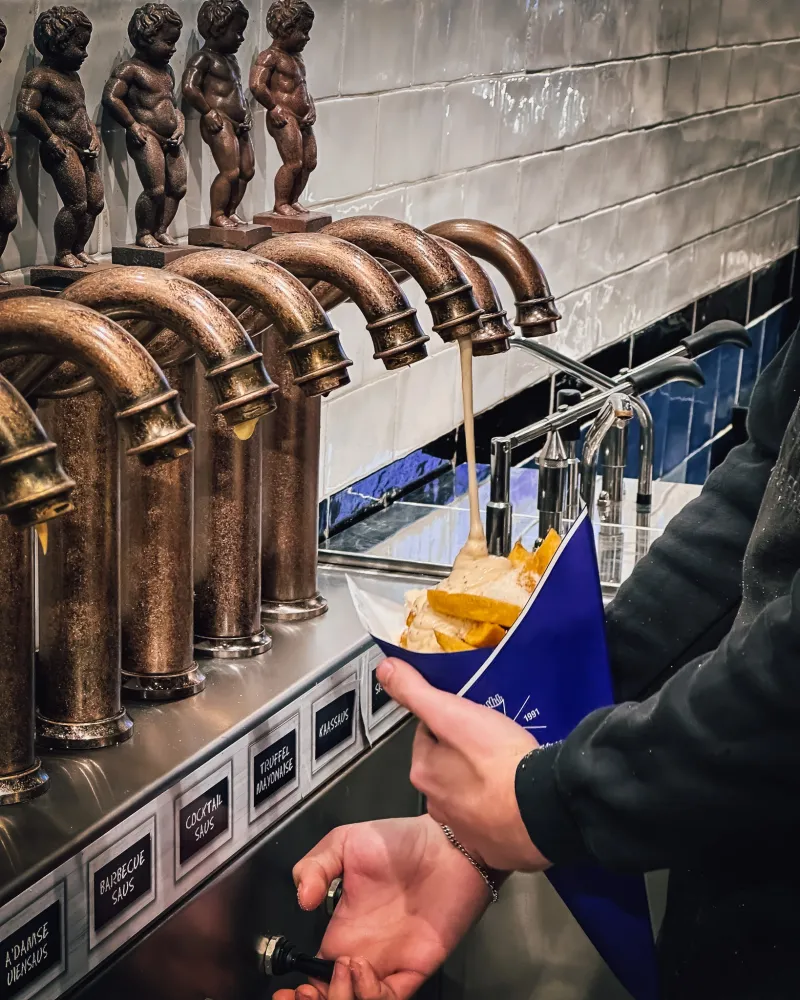
The sauce guide: which sauce goes with our fries
Fry sauce, andalouse, samurai or plain mayo? What each sauce is, where it comes from, and what it goes best with.
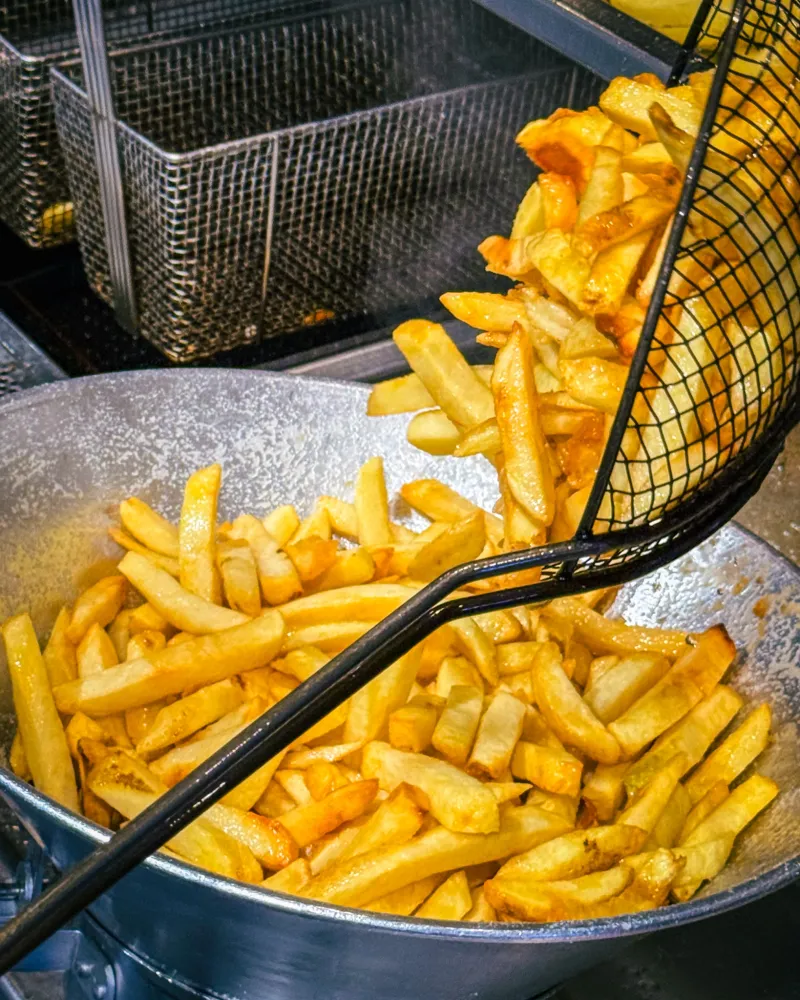
How to spot good fries: 7 things that give a fries shop away
Fresh or frozen? Seven things you can spot at any fries shop in 30 seconds, from the smell of the oil to a separate fryer for snacks.
Flemish fries vs. Dutch fries: why the difference is in the fryer
Flemish fries are made from fresh potatoes and fried twice, never frozen. We explain what that does to the fries in your cone.